
In Columbus, Ohio, Chet Ridenour has spent nearly 10,000 hours investing in the city’s neighborhoods as a long-time community organizer and catalyst for change. His journey began with a simple but profound spark a few years ago: the realization that the people living closest to us can be each other’s best real-world social, support, and safety networks. Below, Chet shares his insights on the transformative power of Asset-Based Community Development (ABCD) and how local governments can partner with residents to build resilient, empowered communities.
Asset-Based Community Development (ABCD) is a powerful strategy to empower residents on every block to take a proactive role in improving the health and safety of their neighborhoods. Traditional community outreach often focuses on a “needs-based” approach—identifying what is wrong, what is broken, and what a community lacks.
ABCD flips this script. It focuses on what is strong instead of what is wrong
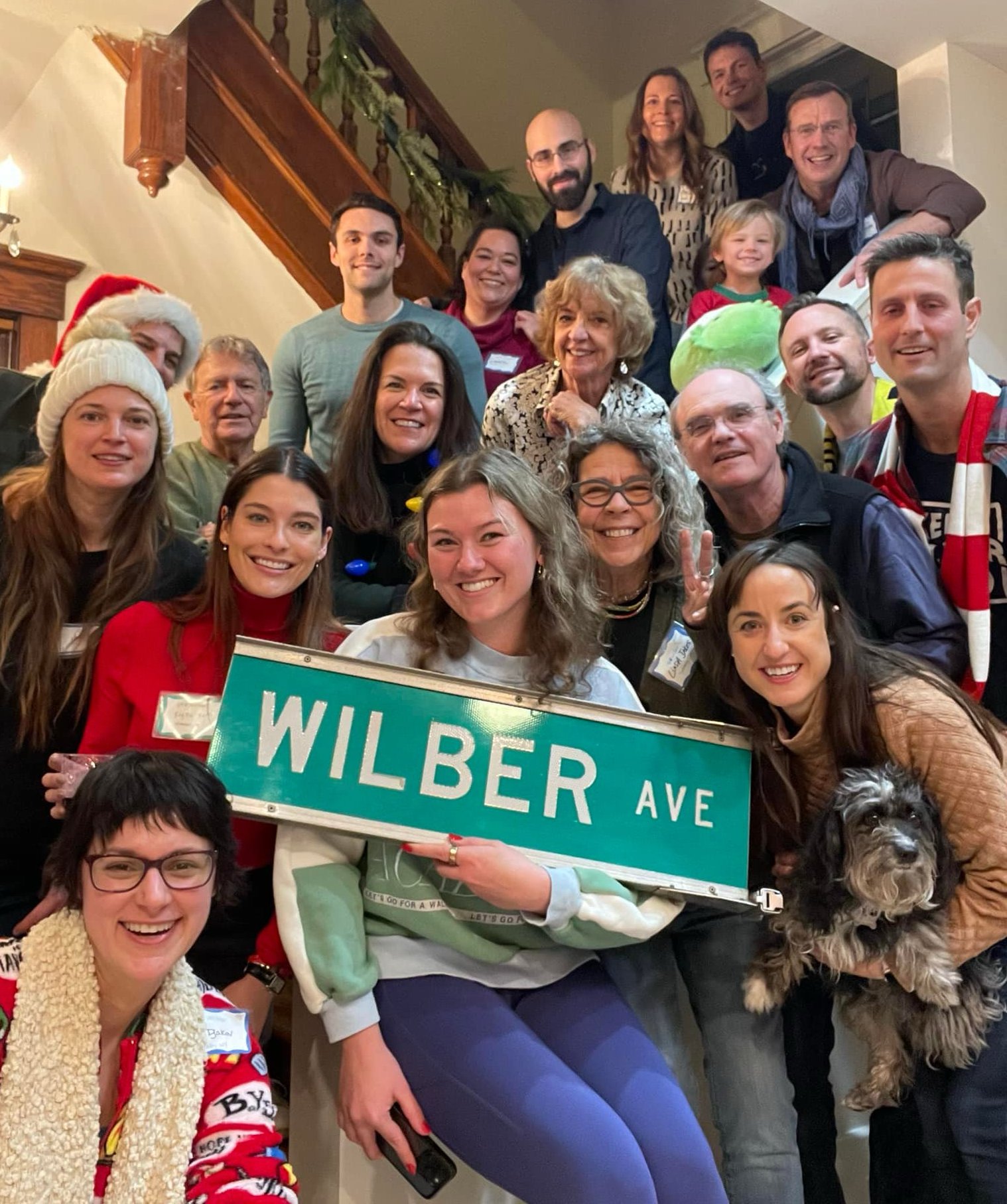
Chet and his neighbors at their annual holiday party.
By discovering the hidden gifts of our neighbors, connecting those individuals and resources, and mobilizing them to take action on causes they care about, we lay down a foundation of community collaboration that pays dividends for decades.
All too often, nearby neighbors are disconnected, unknown, and disengaged from official city planning initiatives.
Yet, these very individuals are the most untapped, unrecognized, and undervalued assets on our city blocks. Inevitably, it is the person living next door who has the greatest opportunity to make an immediate impact on your life. When we make intentional efforts to know our neighbors and their diverse backgrounds, skills, and talents, we make our little corners of the world feel a lot more like home.
But we don’t just have to rely on intuition to know this works; global research and data back up the power of neighboring:

DISASTER RESILIENCY
The Federal Emergency Management Agency (FEMA) has shown that one of the most reliable indicators of how well a community bounces back after a crisis is how well neighbors know each other. When emergencies strike, first responders are often stretched thin and the relationships you have with those on your block are crucial.

MENTAL HEALTH AND LONELINESS
A global study by Nextdoor found that knowing as few as six neighbors’ names begins to build connectivity, foster community, reduce anxiety, and combat loneliness.

HEALTH AND LONGEIVITY
In his best-selling book Bowling Alone, Robert Putnam discovered that joining and participating in just one community group cuts your odds of dying in the next year in half.

PUBLIC SAFETY
Research from Harvard’s JFK School of Government indicates that when comparing two identical communities—one with a 10% increase in police presence and another where 10% more neighbors know each other’s names—the community with connected neighbors achieves better long-term safety outcomes.
Investing in hyper-local neighboring doesn’t just impact neighbors; it directly benefits the operational goals of municipal departments. Below are just a few impacts that local governments experience through this process:
1. Finance & General Government
According to research from organizations like the innovation foundation Nesta and the Tamarack Institute, adopting an ABCD paradigm helps local governments optimize resources through:
- Reduced Dependency: Shifting from a service-delivery model to a co-production model empowers communities to self-sufficiently address hyper-local needs, reducing the strain on municipal budgets (as noted by Grand Valley State University).
- Improved Service Delivery: When a city understands the specific strengths of a community, departments can tailor programs to be highly targeted, responsive, and efficient.
- Increased Civic Engagement: True belonging fosters a sense of civic responsibility, leading to higher voter turnout, better attendance at public forums, and increased volunteerism.
2. Economic Development, Small & Minority Business
A connected neighborhood is a prosperous neighborhood. Organizations like World Renew and the ICMA Center for Sustainable Communities highlight several economic impacts of ABCD:
- Job Creation and Retention: By leveraging existing community assets and skills, local neighborhoods can support new business creation and keep existing small businesses thriving.
- Resource Access: Connected networks help minority- and small-business owners access informal mentorship, networking, and hyper-local funding opportunities (Oxford Review).
- The Power of Local Spending: Data from Civic Economics shows that $100 spent at a local business generates 70% more local economic activity than the same amount spent at a chain retailer. Furthermore, every dollar spent locally recirculates within the local economy 2 to 4 times more than a dollar spent at a non-local corporation.
The Impact in Columbus, OH
Over the past several years, I’ve been pitching the importance, value and benefits of incorporating ABCD strategies into City Department programming. I’ve given testimony at City Hall, have met with City Council members and have successfully partnered with our Deptartment of Neighborhoods to provide CommunityWorks’ ABCD101 for Civic Leaders for their staff, neighborhood liaisons, and program managers.
By strengthening our social fabric and meeting people exactly where they live, cities can foster the resilient, local relationships that residents rely on when they need it most.

ABOUT THE AUTHOR

Chet Ridenour has spent his career connecting people, strengthening communities, and helping groups better organize from the hyper-local block level, and on up.
Most recently, he’s been focused on supporting nearby neighborly connections by supporting The Columbus Foundation‘s Center for HumanKindness program, Kindness Close To Home — work that aligns deeply with what he cares about most: helping neighbors know each other, support each other, and create stronger, more connected communities.
That work builds on years of experience as a community organizer, civic leader, natural networker, and people-centered operator — from founding Good Neighbor Network, to leading neighborhood and civic initiatives in the Short North, to building 100+ local partnerships at Lyft that helped distribute +7,000 CoGo bike share memberships across Columbus.